
Service Dog Program
A dog trained to work for you — and prepared for the travel that comes with it. Training is led by a trainer, step by step, at your own pace.
Real training
A structured programme with hands-on guidance. You train your dog yourself, send videos, and get corrections until the skill is reliable.
Honest standards
Documents are not issued automatically. Every dog is assessed first — this protects you, and it protects every other handler working with a service dog.
Ready to travel
Training is only half of it. After certification we prepare you for real journeys: airline rules, documents, and the requirements of your destination.
What a service dog status gives you
A trained service dog opens doors that stay closed to a regular pet.
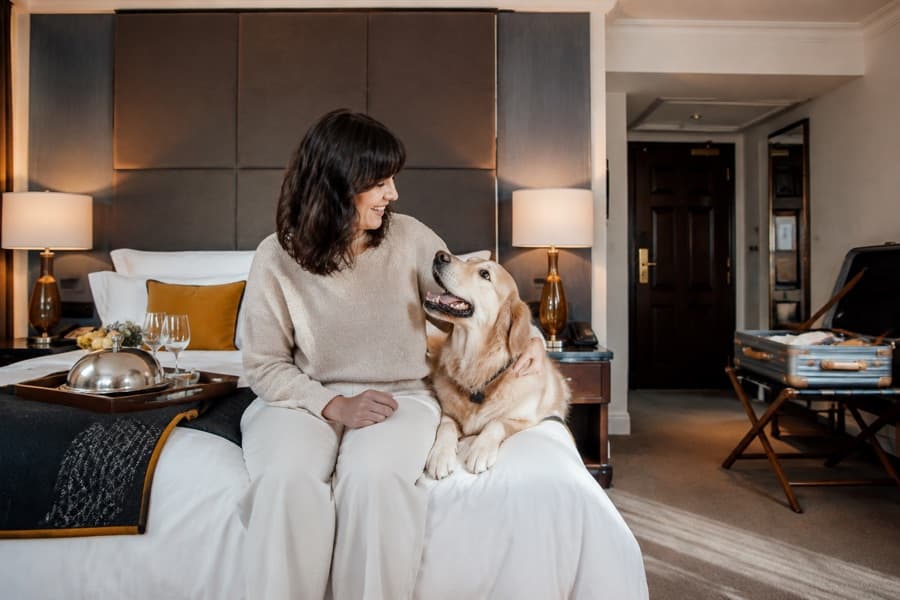
Hotels and accommodation
A service dog is not classified as a regular pet, and most hotels accept her without extra fees, deposits or floor restrictions. This changes the geography of where you can travel.

Workplaces and public spaces
Your dog goes with you to work, to the bank, to government offices, to hospitals. Anywhere you used to be separated, she stays at your side — doing her job.
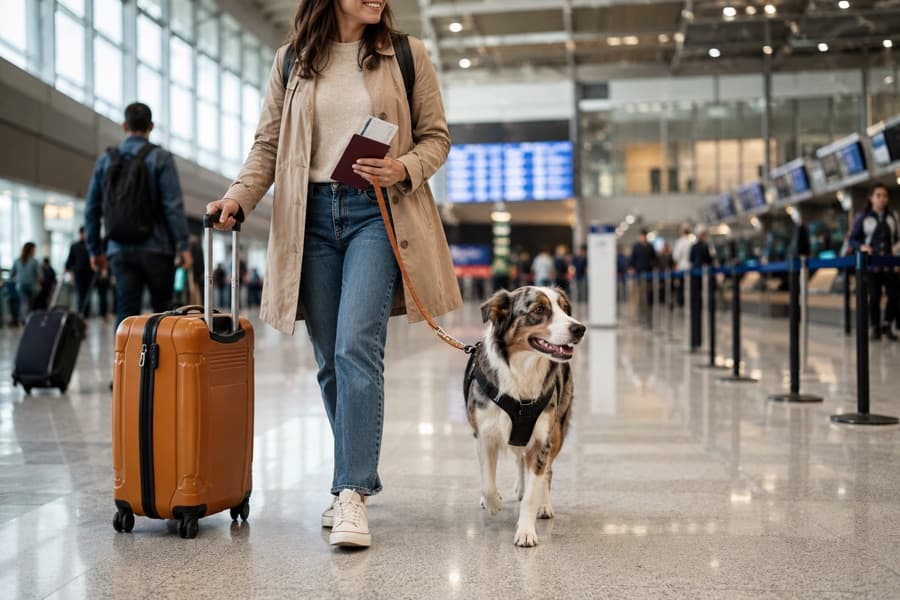
Air travel together
Long flights are the hardest part of a journey. A service dog stays in the cabin beside you. You do not have to be separated or worry about how she is doing in cargo.
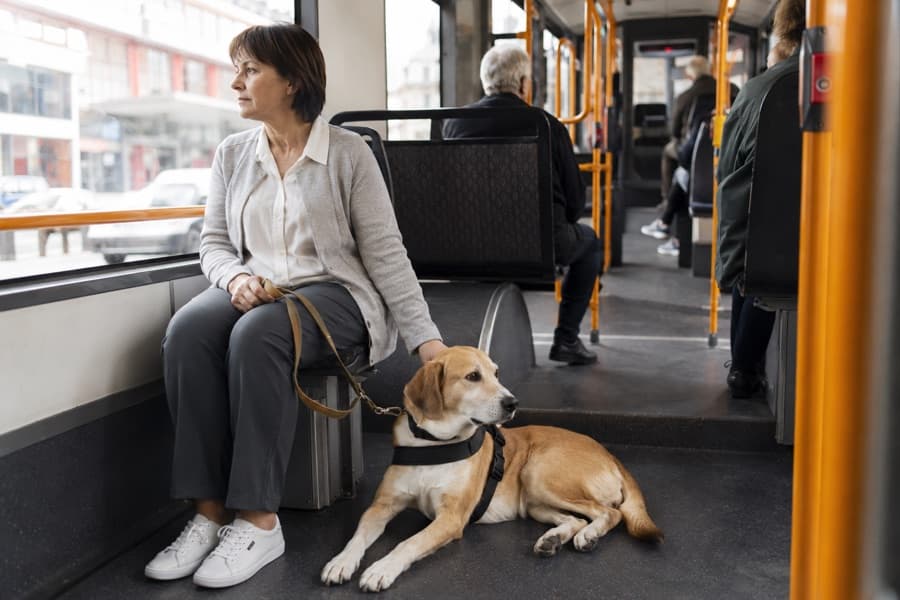
Trains, metro, buses
A trained service dog travels calmly on any public transport — no carrier, no route restrictions. Crowds, noise and movement do not take her out of work mode.
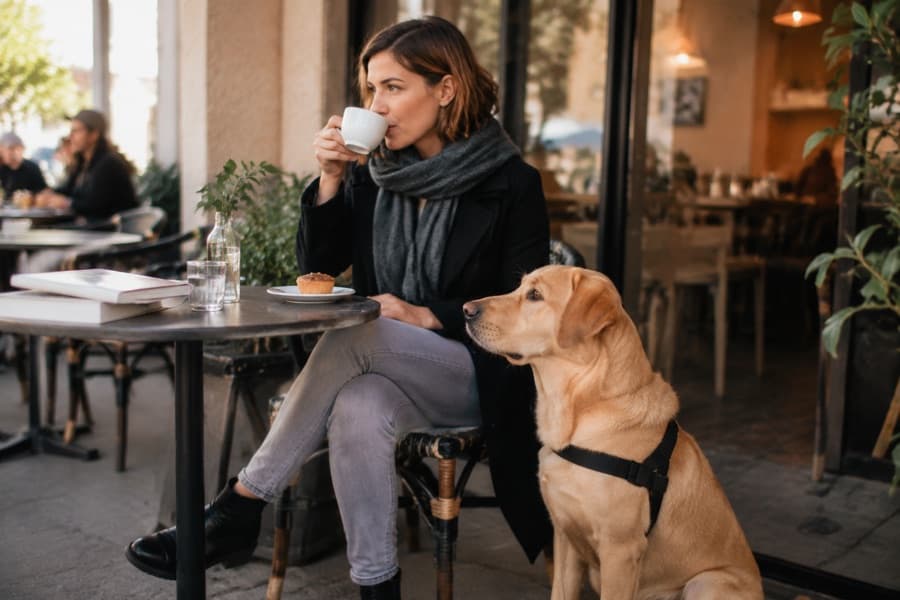
Restaurants and cafés
Your dog lies quietly beside your table, undisturbed by the staff, the other guests or the smell of food. You get to eat a normal meal without leaving her outside or at home.
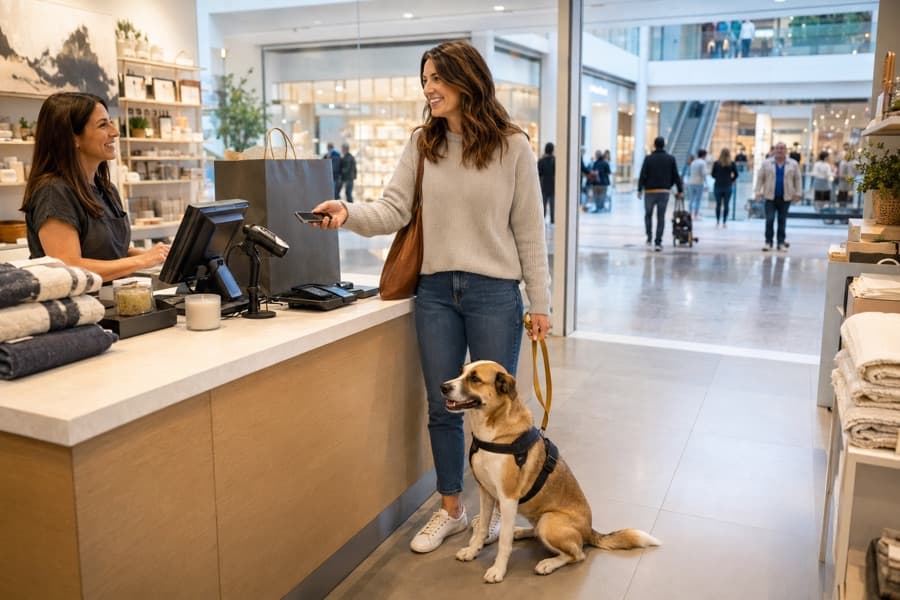
Shops and shopping centres
Shopping stops being a logistical problem. Your dog walks beside you, ignoring trolleys, children and other animals. No rushing, and no leaving her alone in the car or at home all day.
Programmes
The foundation, the public access work and the travel preparation are the same. What differs is the task the dog learns.
What the programme covers
Foundation and basic training
Calm behaviour in any environment, focus on the handler, self-control. Without this, no dog can work as a service dog.
Task work and alerts
The part that differs from course to course: what the dog must notice, and how it tells you. Details are on each course page.
Public access training
Restaurants, shopping centres, transport, airports. Moving skills from home practice into the real world — the hardest and most important stage.
Individual travel preparation
After certification, one to one: documents for your route, negotiations with airlines, the rules of the country you are going to.
How it goes
Application and assessment
You write to us, and we talk through your situation: your health, your goals, your dog, your daily life. At this point we decide together whether the programme suits you both.
Theory and foundation
You receive the training materials for every module and start working with your dog at your own pace.
Practice and certification
You send training videos, the trainer reviews them personally and gives feedback. When the requirements are met, the certificate, ID card and tag are issued. If the dog is not ready, training continues at no extra cost.
Travel preparation
Individual work on your route: documents, airline requirements, the rules of your destination. Support continues until departure.
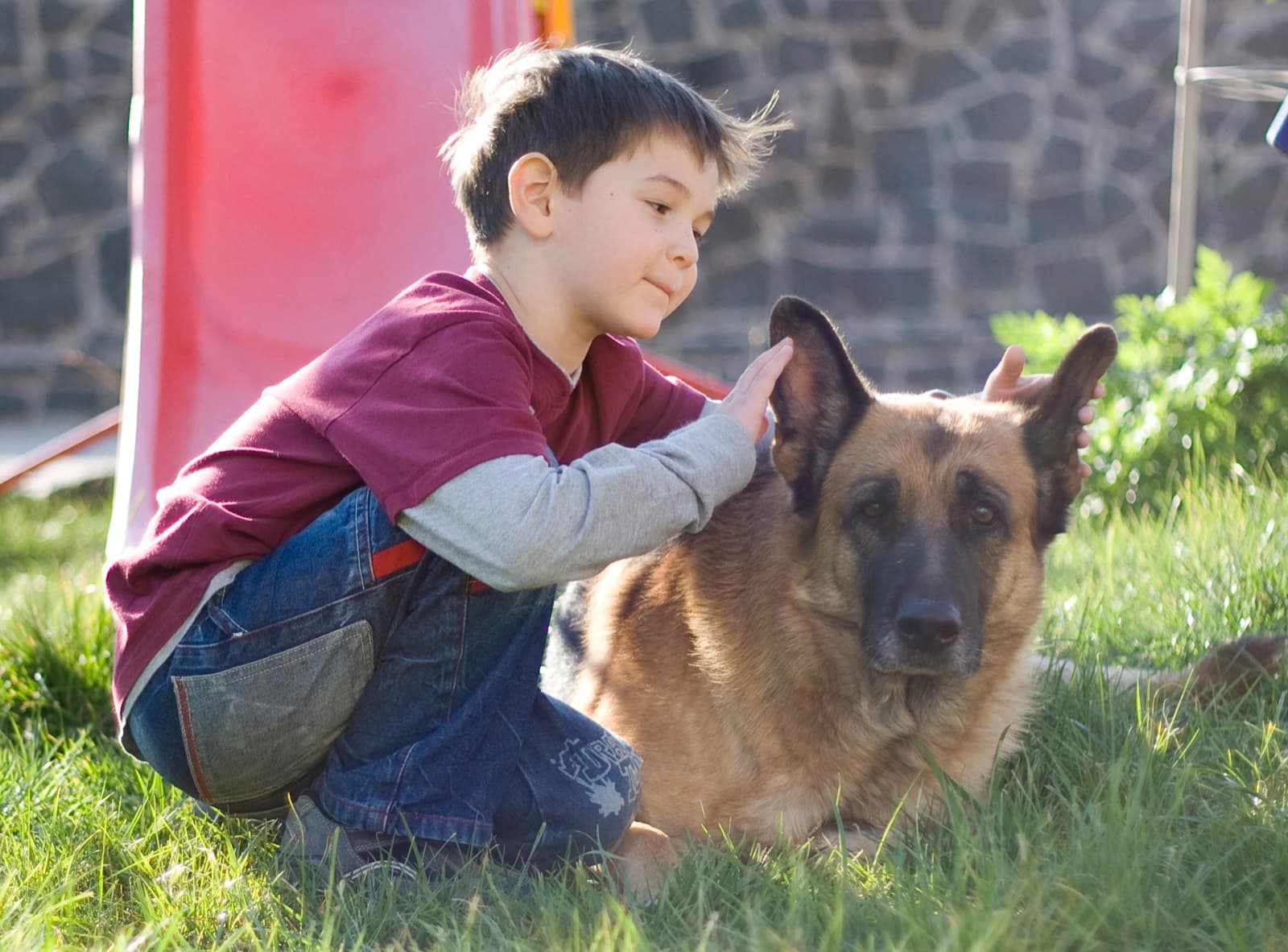
When the handler is a child
Service Dog programmes are open to minors from the age of 12. The training is built individually around the child: their age, their needs, their health, the routes they take every day, and the tasks the dog has to perform. The child is the Primary Beneficiary.
Taking part requires an adult — a parent or legal guardian — as the Supporting Handler. They train alongside the child, help with handling the dog, are responsible for its care and safety, and go with the working pair in public places and on journeys when that is needed.
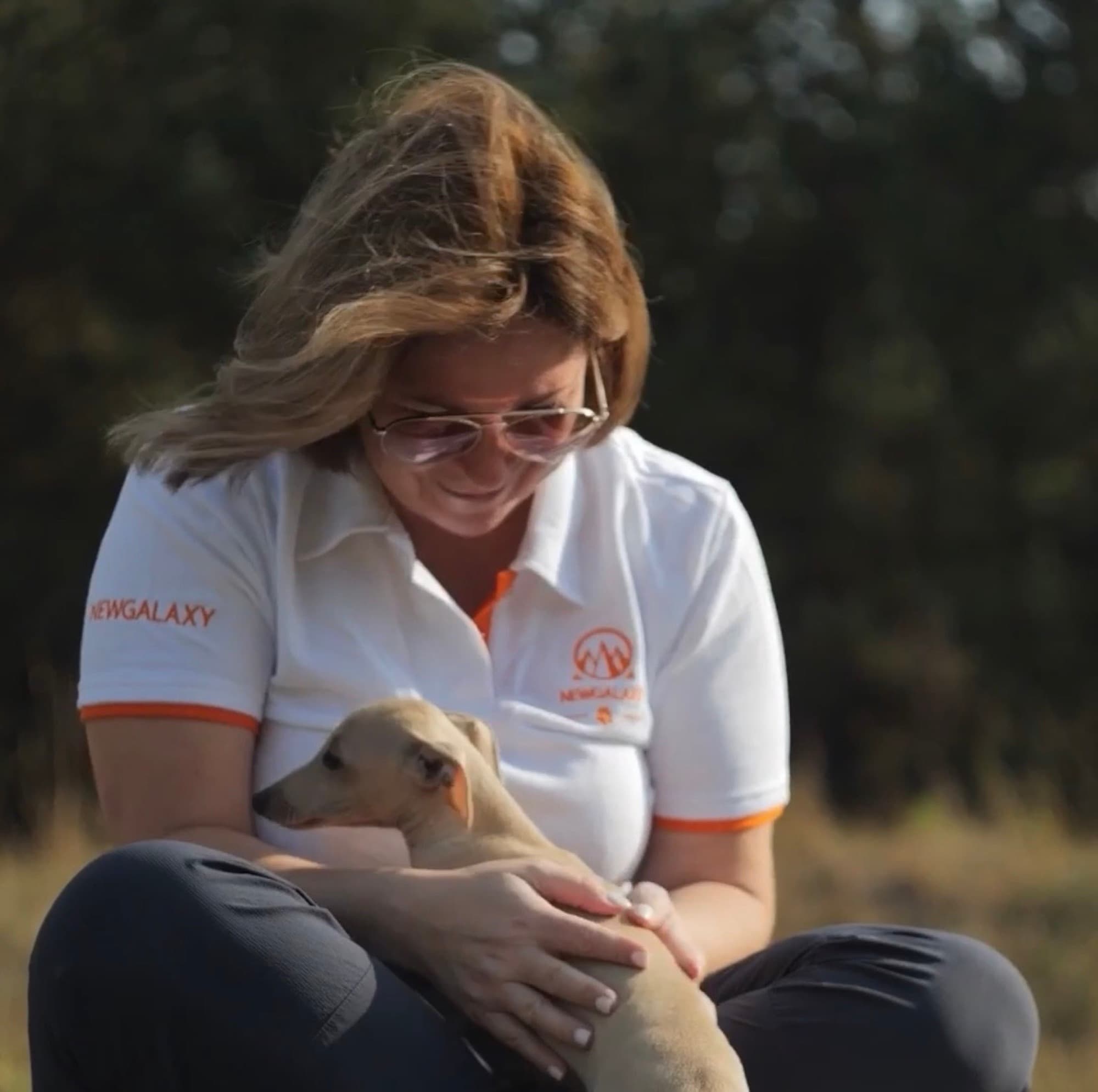
Who leads the programme
The programme is led by Diana Yakubovych — 30 years in canine work: service dogs, sport, shows, kennels — and almost 15 years moving animals across borders.
Since 2023 she has been training service dogs as a partner of an international European school, and has extended the curriculum with her own methodology. The travel part exists because of the second half of that experience: no other course prepares a handler for an airline conversation.
Our story →Questions people ask first
Is this an official service dog certification?
There is no government-issued or internationally mandatory service dog certification in the United States or in most EU countries. The programme gives structured training to both the dog and the handler. On completion you receive a completion document, an ID card and a tag. They help airlines and airports recognise the dog as trained, but they do not replace the forms a particular airline or country requires. We gather those with you during travel preparation.
How long does the programme take?
That is individual. Every dog is different — temperament, starting level, ability to concentrate. Every handler has their own rhythm. The programme is built around results that hold, not around speed, so we do not promise dates in advance. They become clear as the work goes on.
Do I need a trainer with me in person?
No. The programme is built for handler-led training with remote guidance. You get the materials, send videos, and the trainer reviews them, corrects technique and gives feedback. Many people also work with a local trainer for hands-on practice — that is welcome, but not required.
What if my dog does not pass certification?
Certification is issued only when the dog genuinely meets the standard. If the dog is not ready by the end of the training period, we keep working at no extra cost until the skills are reliable. In the rare case where a dog is simply not suited to service work, by temperament or health, we say so honestly and look at the alternatives together.
Check a dog by its code
Enter the 10-digit code printed on the dog’s card to open its profile. Scanning the QR code on the card opens the same page.
Tell us about your dog and your situation
Write to us and we will work out together whether the programme suits you and your dog, and where to start. The initial consultation is free — it is a conversation, not a commitment.
Get in Touch